
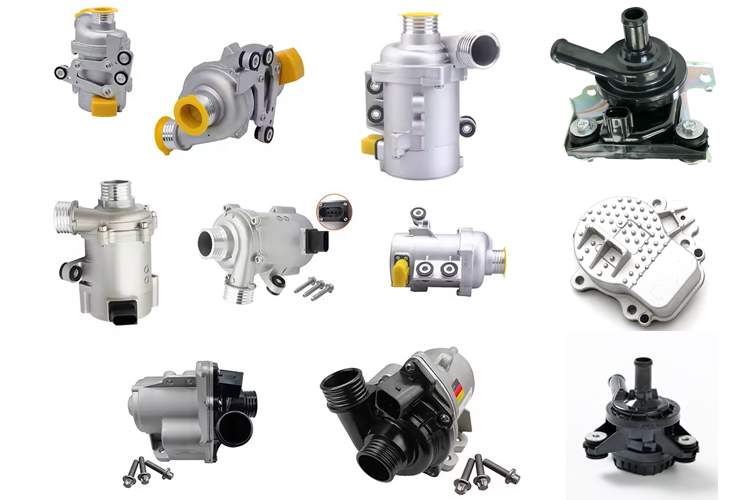
Automobile Water Pump
Automobile Water Pump
The water pump is the heart of the vehicle's cooling system, responsible for driving the circulation of coolant. Typically driven by a belt connected to the engine's crankshaft, the pump's core component is an impeller. As the impeller rotates, it forces the coolant to circulate between the engine block and the radiator, continuously carrying away excess heat generated by the engine.
A key factor in the longevity of a water pump is its mechanical seal. This seal, composed of a rotating "dynamic ring" and a stationary "static ring," prevents coolant from leaking into the engine's interior. Over time, wear on this seal or the pump's bearing can lead to failure, often signaled by a coolant leak or a whining noise. Regular maintenance and timely replacement are crucial to prevent engine overheating.
Maintenance Recommendations
Inspect Seal Integrity: During routine maintenance, check for coolant residue around the pump housing or pulley shaft, which indicates seal degradation.
Monitor Coolant Quality: Replace coolant according to the manufacturer's schedule; degraded fluid can corrode internal components and reduce pump efficiency.
Synchronize with Timing Belt Replacement: In engines where the water pump is driven by the timing belt, replace both components simultaneously to avoid redundant labor costs and potential belt failure due to pump seizure.
 Send Email
 Franky Chung
 17757458869
 Franky